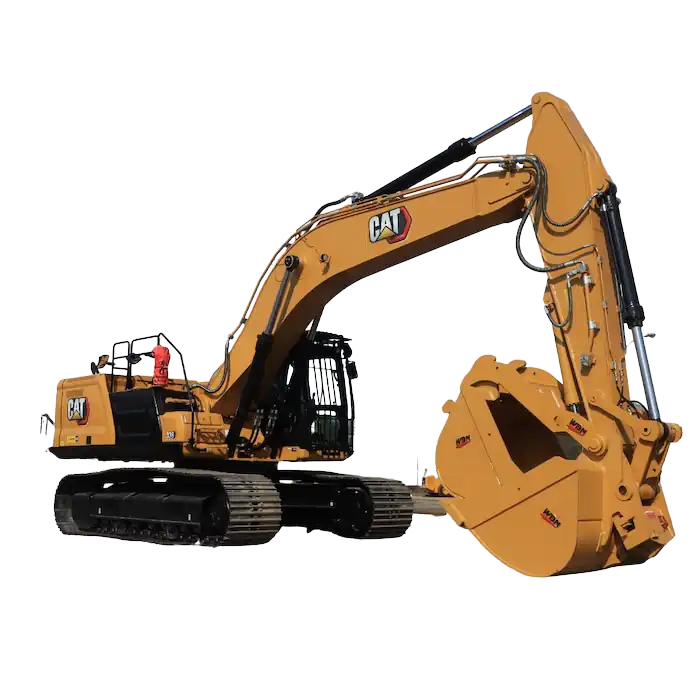
We keep wheel loaders in our Abbotsford yard ready to move, whether you need one for a single day of cleanup or the length of a multi-phase build.

A wheel loader earns its keep by moving loose material fast. On most of the sites we serve, that means scooping and carrying soil, gravel, sand, or demolition debris, then dumping it straight into a truck or dozing it into a stockpile. We see them used for:
If your project involves any of the above, a wheel loader is usually the machine that keeps the rest of your crew from standing around waiting on material.
Wheel loaders are sized by operating weight and bucket capacity, and getting that match right matters more than most people expect. A bucket that is too small means extra passes and wasted fuel. One that is too large overloads the machine and slows everything down. Here is roughly how the sizing breaks down:
Compact loaders run smaller buckets, typically in the 1 to 1.5 cubic yard range, and suit tight residential lots or landscaping work where maneuverability matters more than raw volume.
Mid-size loaders, like the John Deere 544K we currently have in the yard, typically carry buckets in the 2 to 3.5 cubic yard range and cover the bulk of general construction, site prep, and aggregate handling work.
Larger production loaders run buckets exceeding 5 cubic yards and are built for quarry, mine, or high-volume mill yard operations rather than typical job sites.
A good rule of thumb: your bucket load, at its heaviest, should stay within 85 to 90 percent of the loader’s rated operating capacity. Material density matters just as much as volume here. Wet clay and crushed rock weigh far more per bucket than dry topsoil, so tell us what you are moving and we will help you land on the right unit rather than just the biggest one available.
A wheel loader is only as useful as the tool on the front of it. Depending on the job, we can talk through attachment options that go beyond the standard bucket, including:
If you already know what attachment your job calls for, mention it when you call. If you are not sure, describe the material and the task and we will point you toward the right setup.
It depends on what you are moving and how much of it. For general soil, gravel, or debris work on a typical residential or commercial site, a mid-size loader bucket in the 2 to 3.5 cubic yard range covers most jobs. Tell us your material and daily volume and we will match you to a unit.
Yes. We can talk through pallet forks, grapples, rock buckets, and snow blades depending on what the job requires. Ask when you call so we can confirm what is available for the unit you need.
We deliver across the Fraser Valley in as little as two hours from booking, depending on where you are located and what is already in the yard.
Yes. Every wheel loader we rent out has already been inspected and maintained as part of our standard rental service, so you are not paying separately for upkeep before the job starts.
Yes. Whether you need a loader for one day of cleanup or an extended multi-week project, we can set up a rental term that matches your timeline.
Give us a call at 604 556-0557 to talk through rental terms and what works for your project and budget.